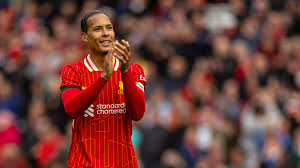
Morgan Rogers’ journey to becoming Chelsea’s £117m club-record signing was anything but straightforward. Just three years earlier, his market value had reportedly fallen to around £1m, and the England international was even unsure whether he would eventually establish himself in professional football.
The move from academy football into the senior game proved particularly challenging. Rogers endured a number of difficult loan spells before finding the consistency and confidence that would eventually transform his career.
His first major test came at Bournemouth, followed by another loan at Blackpool while he was still a Manchester City player. Neither spell produced the breakthrough he had hoped for.
That was a difficult period for a player who had represented England at youth level and had been regarded as one of West Bromwich Albion’s most promising academy talents.
Looking back, Rogers believes those setbacks were essential to his development. Speaking to Chelsea’s club channel, he explained that the experience taught him how to deal with disappointment and focus on the aspects of football he could control.
The winger believes he became a completely different player during those loan experiences, learning what was required to succeed in the senior game.
For more football stories and the latest developments from the sport, visit Football Score Today.
Rogers’ value fell from £9m to £1m
Michael Appleton, who managed Rogers during his first loan at Lincoln City, believes there is valuable experience to be gained from every loan move.
Appleton had previously worked within West Brom’s academy and was already familiar with Rogers’ potential. He pushed to bring the teenager to Lincoln City in League One.
Despite being only 18, Rogers quickly showed plenty of personality. He was comfortable speaking during team meetings and did not shy away from responsibility.
After arriving shortly after lockdown, he made 28 appearances for Lincoln, scoring six goals and contributing two assists.
Appleton remembers one particular incident that demonstrated Rogers’ attitude.
During an away match against Portsmouth, Lincoln were preparing to defend set pieces against several physically imposing opponents. With the team struggling to find players to mark them, Rogers volunteered to take responsibility.
For Appleton, that moment highlighted the teenager’s willingness to contribute defensively as well as offensively. Rogers was confident, but he also understood that becoming a professional footballer required him to embrace every part of the game.
His next move to Bournemouth represented an opportunity to prove himself in the Championship. However, things did not go according to plan.
Rogers started just three Championship matches and scored once under Scott Parker, whose Bournemouth side secured promotion back to the Premier League.
His limited playing time led former scout Des Taylor to describe him as a “slow burner”. Taylor could see the player’s ability but admitted that it was difficult to predict exactly what Rogers would eventually become.
The situation was complicated by Bournemouth’s tactical approach. Rogers had been viewed primarily as a number 10, while Parker’s system did not regularly use that position.
As a result, Rogers struggled to establish himself and was often used away from his preferred role.
Former Bournemouth team-mate Steve Cook believes the experience ultimately helped shape Rogers’ character. Bournemouth reportedly had the opportunity to sign him permanently for around £9m, but the deal did not happen.
Instead of allowing the disappointment to derail his career, Rogers continued working and learning.
His Bournemouth loan was ended early, and he returned to academy football before injury delayed his next opportunity.
Another setback at Blackpool
Rogers’ next loan took him to Blackpool, where he was reunited with Appleton in the Championship.
However, the reunion lasted only briefly. Appleton was dismissed after just two weeks and replaced by Mick McCarthy.
Rogers remained professional despite the disruption. He made 20 appearances, either starting or coming off the bench, and scored once as Blackpool were eventually relegated to League One.
The constant changes made it difficult for him to build momentum.
Appleton later reflected that Rogers had shown patience while recovering from injury, only for the manager who had brought him back to the club to lose his job almost immediately.
Rogers has described this stage of his career as particularly difficult. While other players he had previously played alongside were progressing and receiving opportunities, he found himself waiting for his own breakthrough.
At one point, he questioned whether he would ever make it at the highest level.
His family and friends, however, helped him remain focused and grounded.
From a £1m move to a £117m Chelsea star
One of the most striking comparisons from Rogers’ career is with his close friend Cole Palmer.
While Palmer progressed directly into Manchester City’s first team before eventually joining Chelsea for £42.5m, Rogers moved to Middlesbrough for only £1m.
That move proved to be a major turning point.
Rogers produced an impressive run of five goals and three assists during Middlesbrough’s six-game run to the Carabao Cup semi-finals.
His performances attracted attention from Aston Villa, where several coaches who had previously worked with him at West Brom were now involved in senior academy roles.
Villa initially made an £8m move during the winter transfer window.
By this stage, Palmer had already established himself with Chelsea and earned recognition with England through a series of impressive performances.
Rogers’ own breakthrough was taking a different route, but his progress was becoming impossible to ignore.
His development eventually led him to Aston Villa and then to the biggest transfer of his career.
The player whose value had once fallen to around £1m ultimately became Chelsea’s £117m club-record signing.
For Rogers, the journey provides a clear example of how football careers rarely follow a perfect path.
The unsuccessful loan spells, limited opportunities, injuries and doubts did not define his career. Instead, they helped him develop the resilience, maturity and determination needed to reach the top.
From a highly rated academy prospect to a £9m-valued player, then a £1m gamble and finally a £117m Chelsea star, Morgan Rogers’ rise demonstrates why setbacks do not necessarily signal the end of a footballer’s journey.